What is asset lifecycle management?
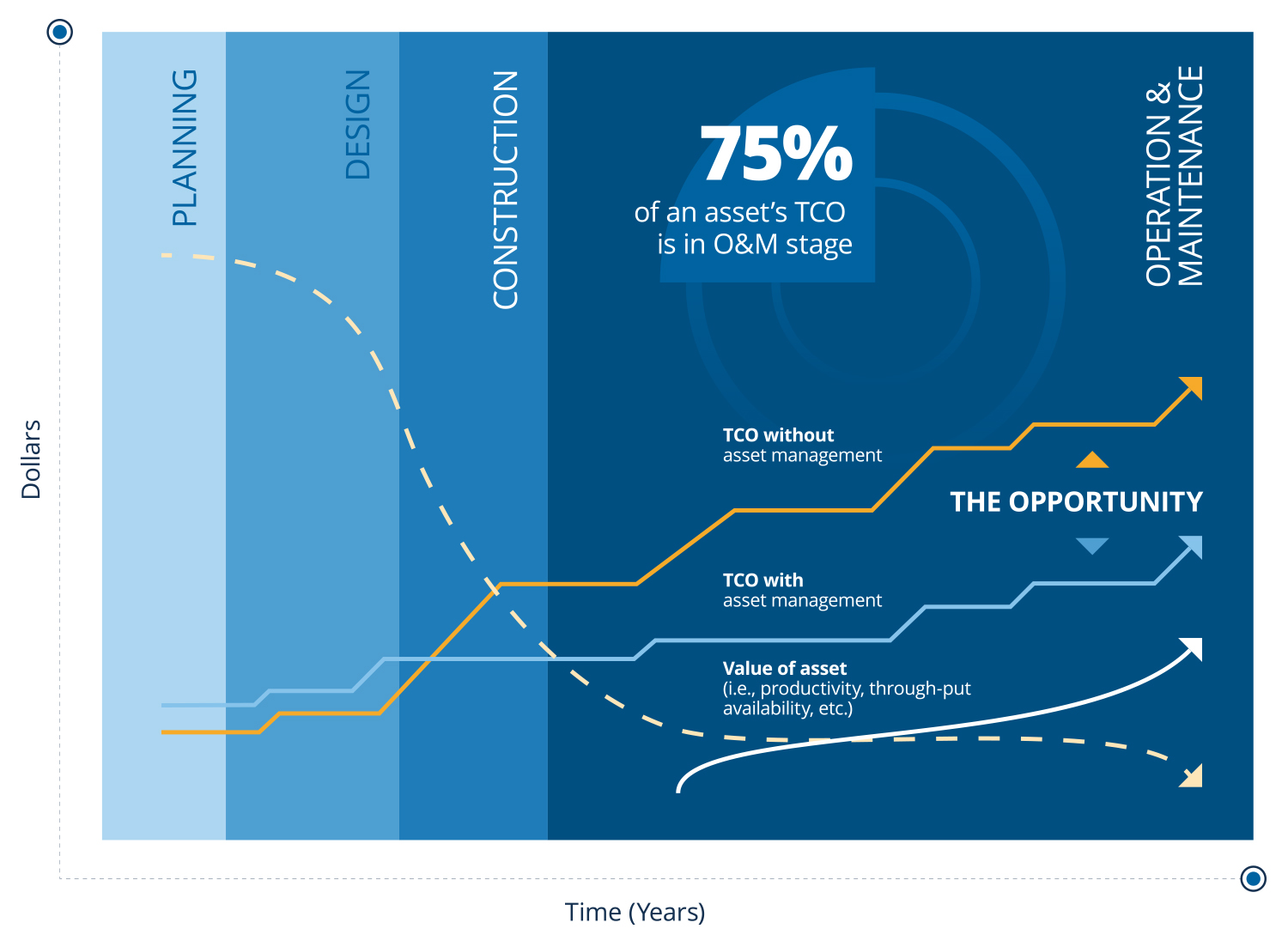
Asset lifecycle management reduces the total cost of ownership of your assets while increasing productivity and efficiency in every lifecycle phase.
Asset lifecycle management phases
The phases of asset lifecycle management encompass the asset’s evolution from feasibility to decommissioning, beginning with planning and design and culminating in long-term operation and maintenance.
Plan and design
The first phase of the asset lifecycle is planning—a critical step prior to asset construction or acquisition. Organizations and stakeholders must first identify a need that isn’t already met by their existing assets. Using cloud-based, connected software solutions capable of analyzing asset inventory data and trends, your organization can perform a thorough assessment of existing assets, identify gaps and needs and define the requirements for new or renewed assets. Community engagement is an important element of this lifecycle phase to ensure your project plans align with the community’s long-term goals.
Using the asset inventory data, key stakeholders from your organization—whether that includes state transportation agency leaders, public works officials or heads of capital improvement programs—can make informed decisions about the addition or renewal of assets. Having inventory data available in the planning phase reduces risk throughout the lifecycle of the new project by enabling informed decisions early on.
Build
In the next phase of the asset management lifecycle, the build process transitions from asset identification to asset delivery. The construction project lifecycle includes bidding, contract management, project management and cost management. This crucial phase involves aligning the bidding and construction of assets with your organization’s long-term business objectives as the asset owner. A successful build phase emphasizes a strategic approach using a connected data environment that provides centralized, digitized documentation that ensures transparency and accessibility of the data throughout the project.
Digital workflows that connect your field crews to the office staff replace siloed data and paper-based systems, helping to coordinate stakeholders, expedite project delivery and reduce cost. With digital product delivery, the data on the as-built asset provides a digital twin that provides a baseline of information that your operation and maintenance teams can use going forward, without needing to spend time and resources on regenerating the data from previous phases.
Operate
As the construction phase ends, assets enter the longest period when the asset is put to use, the operation phase. In this phase, asset managers again use asset data, connected workflows and digital solutions to evaluate and manage the asset’s condition and performance. As the asset owner, you can use enterprise asset management processes and systems to keep the costs of assets under control while aligning the asset's utilization with the broader operational and service goals of your organization.
Maintain
In the field of asset management, maintenance is a foundation for sustained asset reliability and longevity. Implementing a proactive maintenance plan helps ensure safety, performance, cost-effectiveness and efficiency of an asset. A proactive approach to maintenance prioritizes preventive treatments with the goal of keeping the entire asset network in good repair rather than focusing only on fixing the assets that are in the worst condition. The proactive approach reduces the need for more costly repairs and lowers the total cost of asset ownership over time by extending the asset’s service life.
To improve maintenance decision-making, asset managers use a GIS-centric asset management solution that provides visualized, map-based data on asset inspections, work orders, work history, equipment, labor and material use, and many other aspects of an asset’s condition and utilization. The analysis of this data helps asset managers optimize and implement effective maintenance strategies.
Reconstruction, replacement or retirement
Asset lifecycle planning is typically a continuous loop, with the operation and maintenance phases eventually leading back to the start of a new lifecycle as the asset reaches the end of its service life. At its end of life, the asset is slated for reconstruction, replacement or retirement. When the asset enters the rebuilding or replacement phase, the data from the asset’s past lifecycle can be used to inform decisions about its new lifecycle.
In the case of disposal at the end of the asset's useful life, the asset lifecycle ends. When you begin each project with the end in mind, your organization can account for the asset’s ultimate disposal during initial strategic and environmental impact planning.
This final stage emphasizes the dynamic nature of asset management, where data-driven decision-making ensures a seamless transition from the conclusion of one lifecycle to the inception of the next, while fostering sustainability from asset construction to end of life.
ALM guide
As organizations adopt ALM practices, asset owners are digitally transforming the associated business processes in federal and state government, local government and the private sector. ALM solutions enable organizations to derive value from their collected data like never before.